Image Map
Showing posts with label Project Based Learning. Show all posts

October 31, 2019

Build a Game: A Super Easy Way to Include Student-Led Learning in Your Classroom

If you are like me, you are constantly looking for ways for students to prove that they understand a concept or skill.  To me, a test does not provide true understanding of a skill.  I like to have some kind of Project Based Learning to accompany a topic or skill that they have learned.  That's where Build A Game comes into play!  


Build a Game for Student-Led Learning


What's Build A Game?

Build A Game is a super easy way for students, and you, to create a project that shows their knowledge. Students create the game cards based on a subject you assign or a subject they are studying, maybe in Genius Hour.  Students must design all the parts to the game-from the rules to the questions.  It is completely designed by them!  


How Does it Work?

In my class, I assigned the skill for the Build A Game activity.  Students then worked alone to design their game. They met with friends to run through the game and make decisions about what worked and what didn't.  Then they took their game to final product.  This is where the rubric truly comes into play.  This product includes a rubric that can show students exactly what is expected.  Students should refer to the rubric each time they work, but especially when working on the final product.  This way students know the expectations as they work into their final product.


Let Them Struggle!

Build A Game is an uncharted territory for most kids. They may or may not have played a lot of board games in their life.  I do have my games available to them during this time to look at and think about rules, etc.  But, I don't provide a ton of support in these areas.  Students will learn more about problem solving when creating something like this than if I were to answer all of their questions.  Students will also seek out other students who are being more successful with designing these games, naturally creating leaders in this area.  That is one of the wonderful side effects of an activity like this-and, for you, as the teacher, it is then easy to discover strengths and weaknesses in students in general in an area that is new and different for them!  It's a win-win!  


Build a Game Sample project


So, give it a try!  After all, you never know where Build A Game will take you and your students!  You just might have an amazing time together as a class!  I'd love to hear what you think too!  Leave me a comment with your thoughts!  AND don't forget to follow my over at Facebook and Instagram to follow my classroom journey!  I'd love to have you!

Pin for Later


Build a Game for Student-Led Learning


June 27, 2019

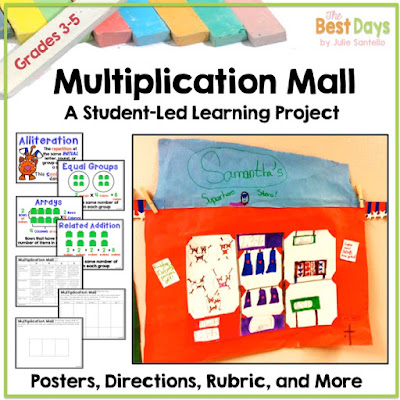
Multiplication Mall to Prove Multiplication Strategies Success!

It wasn't too long ago that multiplication was a rote memory skill-one that simply included memorizing to "know" your multiplication skills.  Now, multiplication is about understanding-and that is a huge improvement upon just knowing the facts by heart!  So, what would make it even better?  How about a project that includes proving multiplication strategies success!  That's what Multiplication Mall does!  


The purpose of Multiplication Mall is to prove multiplication strategies through designing a "store" in the mall.  Each part of the "store" provides evidence that a student understands a particular skill in multiplication.  Let's break this down!  

Starting the Project

Students need some foundation with the basic of this multiplication project. This is where brainstorming comes into play.  Work as a class to brainstorm the type of stores that are found in a mall to get their creative juices going.  You will also need to work on learning about alliterations.  Luckily, there are posters within this product to guide your students with alliterations!  


Multiplication Mall posters

Assigning the Project Steps

Next, students will dive into the project itself.  Provide the rubric to students along with the Planning Page.  This is where students will make critical decisions about what their store will "sell".  A rough draft like this allows students to make mistakes BEFORE they get to their final design.  It is critical to allow this because it builds in success in the final product!  

Students will also work on the posters that hang outside of their store.  Both the windows and the posters are designed to prove multiplication strategies that students know.  To help guide their choices, there are also posters representing each multiplication strategy that students can choose from.  Once all of this is designed, students will then get the teacher's approval to move forward into the final design stage! 

Completing the Project

Students will need bulletin board paper and construction paper to complete this project.  You will need to cut the bulletin board paper, also known as butcher paper, to the size that students need.  This needs to be large enough to fit the piece of construction paper that will house the windows on.  You will also want to have white paper cut to design the posters also.  Once this is done, allow students the chance to create!  Step back and watch what they will do, you will be amazed!  


Sample Multiplication Mall Project


Final Thoughts

Projects are about proving what students know.  Allow students to self grade their projects will give you insights beyond what you can learn by grading them yourself.  It is a relatively easy process.  Give students a yellow highlighter.  Let them work through the rubric, examining their work to best judge themselves.  Then, once they turn it in, grade the project with a blue highlighter!  Anywhere the teacher and student agree, it will turn GREEN!  How cool is 
that!  


Allowing students to prove multiplication strategies for success is an easy way for you to show that students have mastered the standards of multiplication.  But, it is more than that!  It is a way to provide a creative, fun way for students to show what they know!  Grab it in my TpT store!  And, let me know what your ideas are about proving multiplication strategies in the comments!  I'd love to hear!  
Multiplication Mall project


Pin for Later! 


Multiplication Mall Pin


June 20, 2019

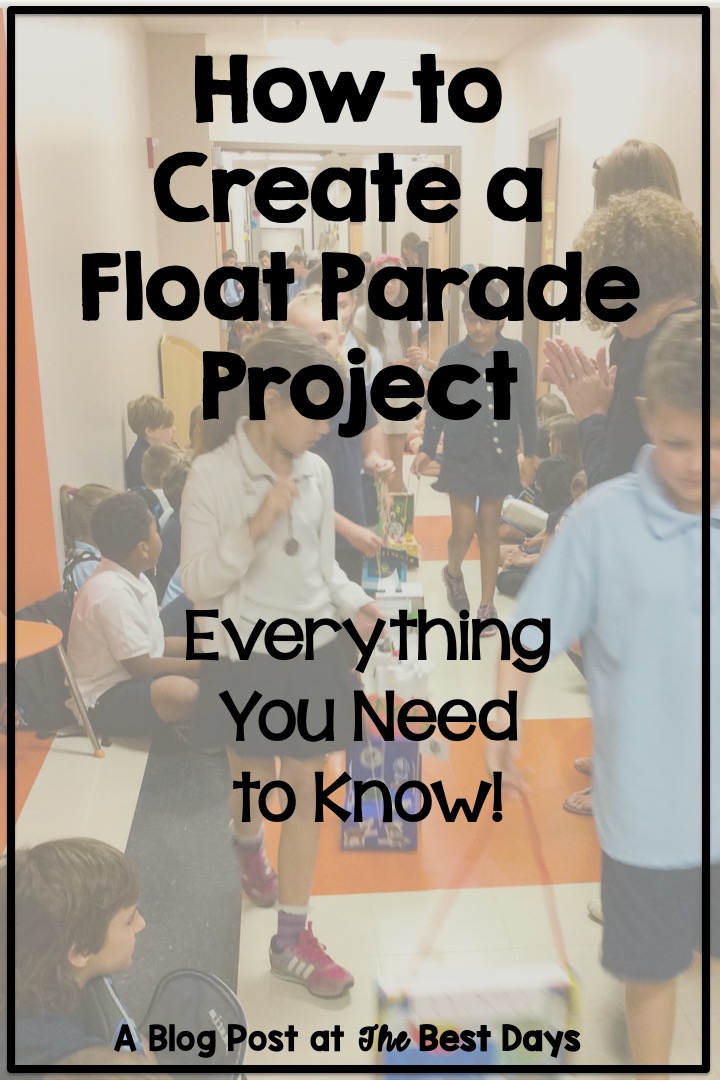
How to Use Project Based Learning to Put on a Parade!

Have you ever wondered how you could easily add a Project Based Learning activity to your classroom?  Are you wondering how to put the project on display?   Sometime it can be merged as one!  Simply put on a Project Based Learning Parade!  


Float Parade Blog Post header


Where to Start?

First, pick a theme!  Every parade has a theme, so a Project Based Parade should have a theme!  Dive into your curriculum to see what could be developed into a project with the outcome as a float-because that's the point of a parade, great floats!  Here are two ideas:  

State Park Floats:  This project explored both the state in general and the region of the US it is found in.  It is primarily to learn about the 50 States.


State Park Float


National Park Floats:  This project explored both the National Park's history and the ecosystems found there.  It incorporated the food chain found in the National Park.  


National Park Project float


You see, both of these have a rich research base.  So, another piece of advice when diving into your curriculum is to look for something with a rich research base.  State flags, maps, park outlines, dates, ecosystems, tourist spots, etc. are all parts of the research base for this kind of project.   What topic are you studying that can allow for this rich base to be met?


Technology Integration

Next, you need to think about how much technology integration do you want?  Students can create research outcomes to accompany the float through the use of technology.  PowerPoints and other documentation can be help students to organize and present the information that they need beyond the actual parade float.  Consider this in your decision making process.

State Project


National Park Project


A post shared by Julie from The Best Days (@thebestdaysclassroom) on


Research Time

Questions about Research Time include how much of a guideline do you want to provide, how much time do students need, and do you want them to complete research in class or at home?  This will also determine your lesson plans and the development of your research questions.  This last point is key to where students go.  Scaffolding them in their research will help them to feel successful throughout the process, whether completed at home or at school! 


National Park Pages Preview of student work


Presentions

Next, you will want to think about how the presentations in class will be planned and what you will need for them.  Developing a rubric is SO important to this part-and the whole!  Research says that when teachers provide  a rubric, students can succeed at a greater rate.  Plus, it eliminates any negotiation for students who do not complete the task.  So, develop that rubric and get it into students hands!  


National Park Project Teacher pages


Once you are ready to present, have volunteers go first.  Students who are comfortable presenting will boost other's confidence and provide a foundation for others.  I try to pick students I know will offer great presentations so that others see and know what the expectations are.  This will often spur them into practicing more too!


The Parade

Finally, coordinate the parade beforehand!  This means you should send our emails to your staff to let them know the day and time you will be parading!  Students in other classes give the project builders the ooo's and ahh's that just make them feel successful!  Visit as many grade levels and classes as possible!  This means lots of eyes on their projects and a desire to make projects in the future!  That's a key to great project success!  


Once you have engaged in a Project Based Parade you will fall in love and want to do it every year!  Here are two projects to get you going - they provide everything you need for a great project parade!  


State Float Park Parade


National Park Float Parade Project


As always, I'd love to hear from you and what you like to do for Project Based Learning!  Drop a comment below or follow me over at Instagram or Facebook for classroom updates!  

Pin for Later:  


Float Parade Pin


January 23, 2018

February Writing Fun: Great Products to Get You through February


Whether you have primary or intermediate students, I know the month of February is packed-each with it's own fun, problems, and issues to cover.  Writing shouldn't be one of them!  I've got you covered!  As you know, I've been talking a lot about writing in my classroom lately.  I've given up the boxed programs for a more "old school" approach-actually TEACHING in CONTEXT!  Imagine that!  Anyways, now that January is heading out the door, I want to cover some of the things I plan to do for February.  Here we go!


Today I am double posting!  I'm over at Conversations From The Classroom talking about how to have fun with STEM and writing through the use of one of my products called Love Bug in a Jar   This has always been one of my favorite prompts to write about and I'm sure this year's group won't disappoint!  Check out what I'm sharing if you love this idea-I think you will!

Check it out here!


If that doesn't fit your needs, I have two other great products for Valentines that just might.  Both focus on Valentines but are geared toward text dependent writing prompts.  These are designed to provide practice for your students in the area of reading prompts and, then, having to write with source materials in their pieces.  These are print and go ready too!  One of the things I've done in the past to help cut the copy costs is print the reading pieces on card stock and then laminate them.  This way I can use them over and over again!

            
Click on the pictures to view these products.  

How about Groundhog's Day!  I've got you covered! This great narrative piece will let kids think about how the groundhog would feel being awaken from a sound sleep to be jolted out into the cold world to see what the weather would be for the next six weeks! Is it me or have you ever really thought about the inaccuracy of that!  The sun has to be out for the groundhog to see his shadow!  Wouldn't that mean spring is on it's way and not more winter!  But, it's a fun tradition and that groundhog lives high on the hog-pun intended!

Check it out here


Right after Valentine's Day, we head into President's Day!  Students would just LOVE writing about a day with any President of their choice.  This can be simply a narrative piece, or, for added bonus, use this document to do some research about a President.  Then, students can use that research to create their day with a President!  How fun is that!

Check this one out here


As February winds up, intermediate students would love to explore the history of snow globes!  Students are provided with three pieces to read and examine.  Once they gather vocabulary, notes, and ideas about the history of the snow globe, students write about their new knowledge.  Then, they get to try their hand at creating their own snow globes!  This was is so, so much fun!

You can find this fun project here! 

Don't forget that the Winter Games are coming!  This product has a little of everything!  Students can do a quick research piece on one of the sports they are interested in.  Once the mini-research is completed, they craft an informative essay as to why that sport is their favorite!  Then, students create a topper to match their choice!  These would look great in anyone's hallway or classroom!  

Find this fun product here!


So, as you can see, I've got you covered for the month of February in writing!  Find them all at my store on TpT!

Pin for Later!


June 7, 2017

Project Based Learning: Shedding the Light on Area and Perimeter


This year's testing anxiety, both in students and teachers, is OVER!  Thankfully!!  However, so is my math book!  Yes, I know! Years ago, a math book was viewed as a holy grail in teaching.  It was, literally believed, that if you finished your math book there was something wrong with you!  You went too fast or taught too little!  Your students didn't master the  material!  Because, honestly, that's what math was all about-mastery!  In our high stakes testing systems, it is now about production line work!  Get it done-faster, incomplete, and without mastery-or your test scores will suffer!  Many times, we do our quick little "project" based questions at the end of the chapter and call it a day!   They "really" shed a light on what kids know, right!  (I can hear you laughing now!)

So, with the dilemma of no more 3rd grade math to teach and a number of weeks still at hand, I set forth on a quest to really "see" what my kids really knew about area and perimeter with this gem-Build a Park Project!

Let's start with what I really thought shall we!

Misconception #1:  
This will only take a week!

I figured the kids would whip out the required elements and the poster, and poof-done!  Now, the reality is, I was a little bit crazy when I thought this!  I've done tons of project based learning.  I know better!  But for some reason I was totally wrong about this one.  I had safely given them 5 days to plan and 5 days to "build".  I quickly realized that the planning was the deeper problem in this activity.  This leads to misconception #2.

Misconception #2:  
My students know how to use the formulas for area and perimeter!

HA!! Now I can laugh at that!  From my brightest to my struggler, they were just counting.  Over and over again, just counting!  We had completed lessons, we had used the formula.  It didn't matter-JUST COUNTING!!  This was quickly evident when none of them KNEW the formulas, even though we had just finished the chapter about a week before!  JUST COUNTING!  This was eye opening!  When we assume from a chapter that they get it, we are doing just that, assuming!  Our biggest struggle came with perimeter.  They could quickly adapt to the area formula-length x width- but the perimeter was a whole different thing!  They relied so much on counting that they didn't even know what numbers to add!  Yep, major misconception on both of our parts!


You can see the planning stage here.  This is where counting took place, from their rough ideas. This led to many problems in calculating using the formulas.  


Misconception #3:  
Required elements are required, right!

I have completed projects with my students that had required elements.  They were successful at that!  In math-it was like a whole new idea!  I had kids creating things with ZERO required elements.  Once I started checking here and there, it was like a lightbulb went off!  I had one student who had to scrap her whole project because they didn't understand that the list I went over and specifically said they needed was, well, required! So, this was another eye opening thing for me!

I worked with this student to adjust some "required" elements because they clearly knew the math on paper but just "missed" the idea of what "required" meant. 

Misconception #4:  
"Doing" the math will be easy.

When you are looking at basic adding and multiplying, you would assume that these are easier skills that students can complete.  However, this is a crossing over of skills, making it more complex.  This means that divergent thinking had to mix with convergent thinking (a concept I am currently reading about in a book called Make Just One Change.)  This cross over meant many easy mistakes being made.  Could they pull the numbers they need and then make them equal to what they "THINK" the area or perimeter was.  They wanted to draw squares instead of use lengths and widths in their drawing.  That meant skipped squares or unequal rows and columns.  That equaled FRUSTRATION!  Nothing that couldn't be solved, but they just couldn't "see" how the error in their drawing made the error on the math page.  Very enlightening I must say!

This shows that this student did not connect the area formula of 6 x 5 = 30 to how it should be correctly modeled.  

Misconception #5
Presenting an idea will be easy with the R.A.F.T. method, after all, that's what it is for! 

If you have never heard of the R.A.F.T. method,  you are missing out.  This easy to use writing strategy is a fun way to motivate students to write.  The have a R. role, A. audience description, F. format  for a topic to be written as, and T. the topic to be written about.  I motivated them with this idea:

Yet, I got everything from a minute of sharing which sounded blah to a full fledge sales pitch.  The R.A.F.T. did motivate them, but I did not give enough information for all kids to really get it!  So, I got wise. While kids were sharing projects, I jotted a few great ideas I heard and, with that in mind, created a guiding document to help the students next time!  Here are some of the great ideas I heard from their presentations:

        *Share the name of your park (obvious, yet missed by many)
            *Include the theme of your park and why it is that theme
            *Share important locations and how they can be enjoyed by "guests"
            *Include a reason to invest in your park-what are the best qualities?
            *What is the price range to invest in your park?  (This is a great practice in place value and
              the value of land, etc.


This was one of the projects that had a full sales pitch as well!  


That about wraps these misconceptions up!  It was truly an enlightening thing to do.  The BEST moment of this entire experience was when my true math struggler made a HUGE connection between the formula and the shape, something this student had missed all along, even when counting. This student had that sudden light bulb moment where they literally went "OHHH!" when writing out the perimeter formula!  This child also scored the best they have ever scored on anything in math because other qualities emerged.  Their ability to give a good presentation, the detail they put into the project that others did not, the pure success this child felt all became a key component in the end result.  It truly reminded me of the reason why we must be do projects in math-and it will spur me on to find more!  

So, here it is!  

As you can see, this project is fun and informative for both the student and the teacher.  And, you get everything you need to complete this project and assess their work.  It really is an amazing project that I am so glad that I completed with my students and hope that you will complete with yours!  Let me know what you think by adding a comment too!