Image Map
Showing posts with label Students. Show all posts

July 24, 2018

Reflecting on Open Seating in the Classroom

Last summer I explored Student-Led Learning in depth and pledge to reflect upon that practice-and I failed at it!  Miserably!  However, I did not fail upon the practice of this, including my pledge to try Open SeatingOpen Seating is different than Flexible Seating as it allows students to find their own seat in the classroom.  In best practice, it is done on a daily basis.  (Check this article out!)  Upon reflecting on open seating in the classroom, here's what I found worked for me.


Students sitting around a table working together with text that says Reflecting on Open Seating in the Classroom


What "Kind of" Worked!

First, I did try the idea of weekly moving of students.  That is the best I could do with this practice.  We never moved into the ability to do a daily change.  It was a huge investment in weekly changes when I was working on that practice.  I slowly moved into bi-weekly, which ended up becoming monthly.  I just could NOT put that much time into moving students around, not in this testing environment.  In addition to this, my administration became REALLY strict about bell-to-bell instruction.  That included on Friday.  We had our RtI invention at the end of the day, including Fridays.  I just could NOT fit everything in.  So, it became a monthly changing of seats.  

Second, we tried truly Open Seating.  It worked for a good amount of students.  However, as you would predict, there were "those" kids who just could not do it.  It was fewer than I thought it would be, which was surprising.  Students had to be reminded to try new friends, even with the idea of trying subjects, etc.  They tended to still want to migrate to their friends.  Or, carry on a pattern.  


Surprising Finds


Patterns-we soon discovered that certain students had patterns, including areas of the classroom that they wanted to sit in.  It was very hard for these students to want to be flexible.  At first, when kids found "their" spots, I allowed for them to stay in that location for more than one rotation.  But then they never wanted to move!  It became a need because as the year progressed, some of the other students needed to be separated.  Same problems as a regular class!  The thing I kept coming back to is that I wanted them to feel comfortable in a spot that they felt allowed for them the best opportunity to learn.  That was the hardest thing to balance.  

A square picture with two girls working together with the text Open Seating Building Partnerships

Partnerships-This was the most interesting discovery!  Students really do have the ability to find learning partners.  It quickly became apparent that this Open Seating opportunity allowed for partnerships to strengthen and grow.  Frequently, students began to sit together.  I began to watch these partnerships closely, to see if there was value within them.  There was!  I then gave permission for those partners to begin to stay together!  This was amazing, but came with some consequences.  Just like anything, this could wear on these kids.  They actually then knew that it was time to move apart-and WOULD!  Soon, these teams were back at it, working together although their seats were not.  AWESOME!  

Overall, I'd try Open Seating in my classroom again.  Students can and do monitor their choices.  They do determine where the best learning location in a room is. They do know when to give up friends and move to working partnerships.  Again, this applies to the vast majority of students.  Just like in anything, reflecting on open seating in the classroom is just as good for students as it is for the teacher!  

Let me know your thinking on Open Seating in the Classroom!  I'd love to know if you have tried it or you are willing to try it!  If you are, I have just the product to get you started!  Find it in my store!  In the meantime, drop your thoughts in the comments!  


A square cover for the Open Seating Product on TpT offered in this blog post.  It shows the posters and tents available for this product.


Pin it Later

Pin for Open Seating that is vertical and shows two girls working together, a table team of students and the text saying Reflecting on Open Seating in the Classroom.


December 26, 2017

Giving Up The Writing Program: What I'm Doing Instead


Throughout your teaching life, you will have moments of discovery-about who you are and what you truly believe as a teacher.  I've had a number of those through my career.  The first one was that I would switch from the traditional method of reading and become a more "Balanced" Literacy Instructor.  Not in the sense that is today's "Balanced" Literacy (Which is a farce-but that's another blog post!) Another was when I discovered that I was truly a great writing instructor-because I loved to write and I learned from the very best!  Karen Padgett-may your retired teacher time be the VERY BEST, wherever you are!  Yes, I learned from a very wise and knowledgable peer!  Not some crazy writing program that everyone hates-but REAL teaching!  REAL TEACHING!  

So, when I found myself saying this, I was completely SHOCKED- "I don't know how to teach writing anymore!"  Yes, I said that-because I didn't.  You see, I've been bogged down in writing programs-Lucy Calkins, Write Traits, Top Score, Making Meaning Writing-you name it, it's come my way.  In that moment I realized I needed to STOP THE MADNESS and go back to the Karen Padgett way of life-write every week with a purpose!  Just Write! (Oh, wait, that was ANOTHER program I tried!)  


Here's how this breaks down day by day:

On Monday you introduce the prompt and plan.  That's it.  The key to this method is in the simplicity of each day.  When students get overwhelmed, they don't produce the writing you expect.  That is what I have learned over the years of teaching writing-small chunks for small kids produced the best results.  And so does planning!  So many people skip this part but it is the KEY to excellent results.  It takes the ideas for writing from higher order thinking to the knowledge level.  (Read more about it here!)  So, planning is KEY!

Tuesday is modeling day for the teacher and writing day for the kids.  Again, I take this in small chunks.  I start with proposing a grabber, or introduction, statement.  Here is something to keep in mind-kids WILL copy you.  That's what modeling is-the opportunity to show a technique.  If they copy it, so what!  Really, I mean that!  They will eventually venture off into something different-I PROMISE!  What you are doing is loading their tool kits with ideas.  You just have to remember that your introduction statement is no different than a list of ideas you would put in a writer's notebook.  Once I get the introduction started, I form my three ideas and add those to my paragraph.  I finish with a strong closing-again, a modeling technique that allows kids to grow their tool kits.  Then, I give students the time to write their introduction-and that's it!  And, yes, I do this week after week!  

Wednesday arrives with a little more writing.  I will often model my opening of the second paragraph.  Then I continue to write while students write their second and, many times, third paragraphs.  This is where I should take a moment and talk about the end of each writing period.  Students are always sharing throughout this process, in the form of the last 5 minutes of the writing period.  During this time I provide specific feedback as to what students have done correct in their writing.  I also provide ways to boost their writing.  This is the specifics of paint a picture with your words, using figurative language, boosting strong verbs, and any other opportunities that present themselves.  I always phrase these things in positives, such as, "One way to strengthen your writing would be...".  This allows students the opportunity to change their writing and for others to apply this same idea.  Many times, I open the writing period with this same technique.  

Thursday arrives as a time to complete any of the remaining body of the essay.  Again, I start with a quick modeling of what I am working on within my own writing.  Do not underestimate this part!  The more we model writing, the better it is for students.  And, it actually improves our own writing!  If we can grow as writers, we can help students grow!  Depending on the process we are at in writing, I may even model my conclusion.  This is where it gets tricky.  You don't want to jump into the conclusion until you are sure that you have modeled it time and again.  But, if we are on a short week, or Friday is heavy, then I will model this process at this stage.  

And, finally, FRIDAY!  As I just said above, on Friday we work to complete the conclusion.  This should always include a restate of the topic, followed by a reminder of the information inside for an expository or informational and an opinion piece.  For narrative, you are looking for a wrap of the ideas, the solution, and a lesson learned.  Model, model, model these ideas!  In addition to this, it is very important for students to then edit their work.  They need to read it out loud to others and check for spelling and grammar throughout the week.  

I am actually super excited to be going back to this method and seeing what my students can do.  Yes, by the end of all of this we will be moving into how to add information from readings into our work to get ready for fourth grade! But, this is where we are going to go  from where we have been!  No more programs, no more jumping around with ideas or things that are taught.  Just modeling, embedding instruction in real learning, and letting kids learn how to REALLY write!  Here's where I'm starting!  


You can find this in my Teachers Pay Teachers store and it will soon be part of my January Writing Prompt Bundle!  I hope you join me in this simplification of writing program, because it WORKS!  Let me know what works for you!  I'd love to hear your ideas!  

Pin for later! 


August 4, 2017

Student-Led Learning: Classroom Design and Open Seating

Have you heard of Open Seating?  I hadn't and my first reaction was that it was just another name for Flexible Seating.  Was I surprised when I read that it was not!  Was I even more surprised when I decided it was just right for me!

Open seating, classroom design, student-led learning, student centered, classroom climate


I was tooling around the Net when I happened upon THIS ARTICLE from Scholastic.  The idea intrigued me, but, to be honest, I thought htis lady was NUTS!  Letting kids pick their own seats!  Well, the more my Professional Learning Community discussed this, the more it seemed to fit into the Student-Led Learning model.  We wisely began to look closer at this model and we decided to incorporate one more idea into this.  REFLECTION!  If kids really thought about what worked for them in seating, if kids really thought about location and issues with others around them, could they actually do this?  Could we trust them with this wisdom!  So, we made a decision!  We are trying it out!

With this came the idea that came the fact that students needed a way to be guided and to reflect upon the seats they were in.  Open Seating Posters and Reflection was built upon that idea.  Here is a little video explaining how I set up my classroom and how Open Seating will be used.  Sorry about the VERY quick change over! I'm still learning video!  


July 18, 2017

Student-Led Learning: What Does the Research Say?


competency-based pathways, classroom climate, student-led research, research,


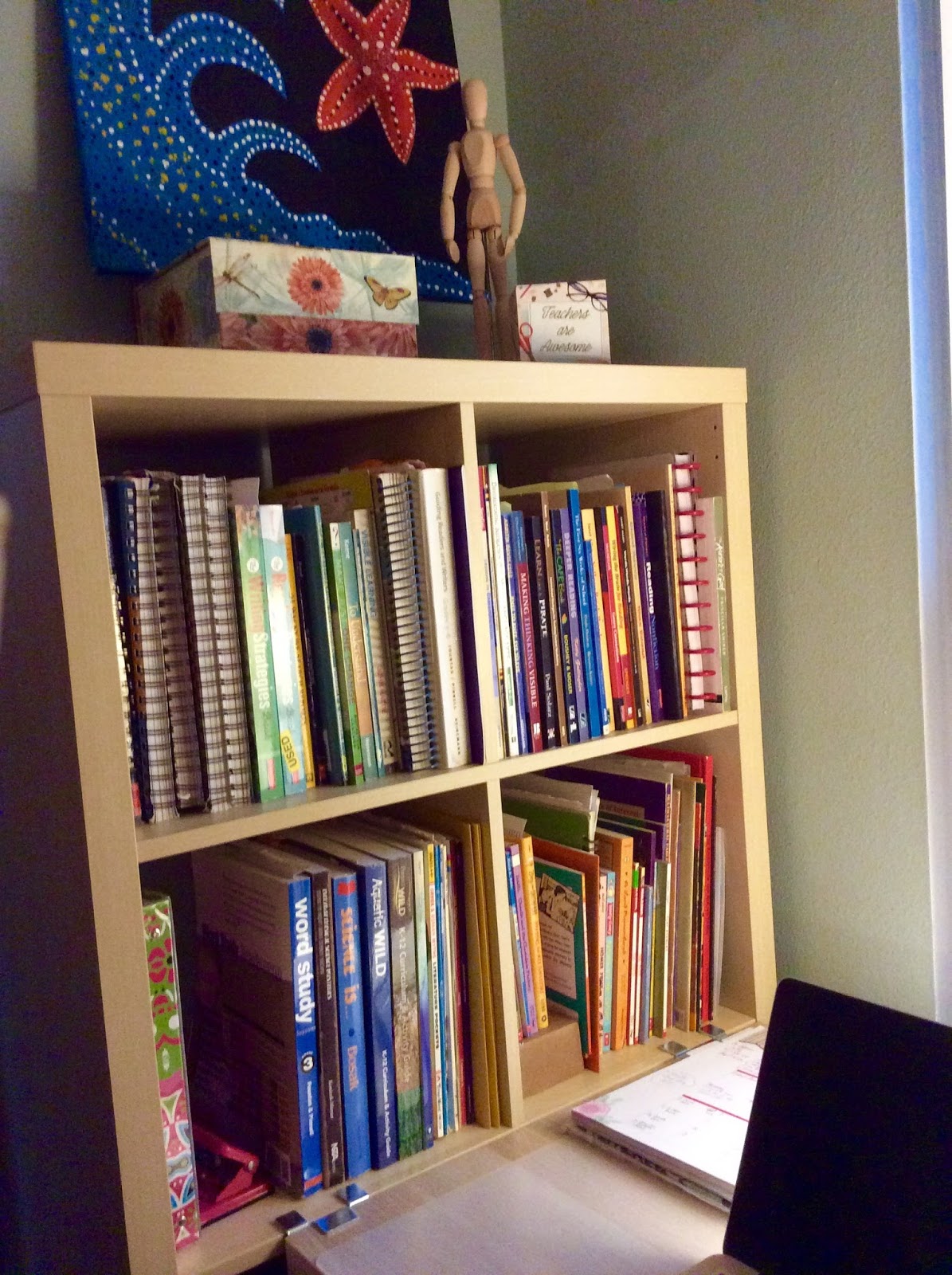
"Ugh," I just have to say it, "UGH!" This is probably the hardest blog post I've ever written. Can I say, I really do love research. This is a picture of most of my collection of professional books. (Finally in one space!  Some, truly, are still at school-about 20 more!  Yep, I have a problem!)  

I've read most of these from the front to the back! Some are new and I'm working my way through.  So, I'm very familiar with research.  The UGH of this post is finding research about the actual practices of Student-Led Learning.  With that being said, we are going to start off this little look with...John Hattie!  

You have to give this man kudos! It isn't rocket science to take all the best research and find out what it says, together, in one place!  If you haven't heard of Hattie, this is exactly what he did.  Gather it up, synthesize it, and spit it out so teachers know what is best. Yet, we, as teachers, have barely heard of him!  Now, I have to admit, I don't have the most up to date book either, but fact is fact, there are some key points to Student-Led Learning that are targeted in his synthesis of studies.  They parallel claims made by the author's of Fearless Learners.  Let's take a look, shall we!

(Please note:  I have not taken these claims word for word from the text.  I have synthesized myself and put their ideas into my own words!)


Claim #1:  Students understand and can explain the mastery of standards.

Hattie:  Self-Report of Grades 1.44 (High Impact)
This is the highest impact on learning in Hattie's book.  It DOES NOT mean that kids are explaining their grades.  What it means is that students have views of themselves and how they learn. The level of achievement they believe they have directly impacts what they do.  Student-Led Learning allows students to feel successful, makes them aware of what they have mastered, and builds their self-belief systems.  I believe that this directly impacts their ability to walk into another grade level believing they are better, stronger students, even if it isn't a student-led classroom!  


Claim #2:  Students master materials instead of working through units at a teacher paced learning outcome.  

Hattie:  Mastery Learning 0.58 (High Impact)
This claim states that if students are provided with clear explanations of what it means to master the material, they will learn with more success.  This one comes with some tie-ins.  There include cooperation with classmates, classroom climate, lots of feedback, corrections of mistakes, and using diagnostic formative tests.  Interestingly enough, these are all claims made by the author's of Fearless Learners!  The little I have done with student-led learning also points to this being a valid claim!  SCORE!


Claim #3:  Students improve verbalization of skill understanding and self-question in the classroom.  

Hattie:  Self-Verbalization and Self-Questioning 0.64 (High Impact)
In one study that Hattie read, self-verbalization was among the highest returns in student strategies!  This is key in task oriented skills, such as writing and mathematics!  Awesome!  And, as far as questioning goes, it shows that the return for students is biggest in the lower ability and special education students in the study! Win/Win!!!  


Claim #4:  The teacher/student relationship grows and is key to the learning in the classroom.  

Hattie:  Teacher-Student Relationships 0.72 (High Impact)
Both authors in the text specifically discuss how much their relationships with their students change.  From my experiences with this type of learning, I have to agree.  Their needs and feelings become a core part of the classroom, creating a key community of learners that support each other without the teacher's interventions. They thrive.  According to Hattie's work, this is called a person-centered teacher.  This person-centered teacher builds a classroom of respect that allows for fewer resistant behaviors and higher achievement is the outcome! Who knew!  The key to all of this-the teacher needs to facilitate students' development within the classroom through empathizing with the students and providing feedback to self-assess, feel safe, and learn to understand other students in the classroom as well!  I'd call that a Student-Led Classroom for sure!  


Claim #5:  Students are able to meet goals they set for themselves.  

Hattie:  Goals 0.67 (High Impact)
According to the author's of Fearless Learners, goal setting is found throughout the student's day, week, month, and year in a student-led classroom.  This comes from the schedule they build each day for the next and all the way through each academic task and activity that they do.  Hattie's research says that they provide the link between the past and the future.  This is most valuable when students and teachers set challenging rather that "do your best" goals!  The most important thing in goal setting is the difficulty of the goal.  It directly connects to the performance of the person who sets that goal!  The student-led classroom is full of goal setting opportunities, making it, yet again, a classroom reaching for success simply by the make-up of design!  

And, there you have it in a Hattie nut-shell!  Oh, there's a lot more out there, and I'm reading up on a few more great research moments.  I think that's where the UGH really lies. This one was easy to locate and understand, which is what makes Hattie's books even nicer.  I look forward to sharing more information with you as I research deeper into this.  I can't promise that any time soon, because I'm finding some really meaty stuff!  Anyways, let me know what your thoughts are about this research and your experiences with the Student-Led Classroom!


July 13, 2017

Where Can I Find More Information on Student-Led Learning!

student centered learning, classroom climate, students as leaders, student centered resources

We are always looking for great resources as teachers, but I've found that discovering Student-Led Learning resources are not that easy.  I've found tons of information on Pinterest about Student-Led Conferences, but very little on Student-Led Learning.  However, I've found some excellent sources!  Here's a round-up of some great sources out there!  

The Student Centered Learning Podcasts

These podcasts share the stories and ideas found in a variety of learning ranges.  They are easy to listen to and provide personal experiences within the Student-Led classroom settings!  Follow them on Facebook as well!  


Models of Excellence


This amazing site provides great exemplars from REAL students who have gone through the Student-Led Classroom model!  This site is a MUST to save and come back to often!  


Edutopia 


I have a number of great articles about Student-Centered Learning at Edutopia! Be sure to check it out, including this great article, A Case for Student-Centered Learning!

Personalized Learning Toolkit  


There are some AWESOME materials on this site to get started mentally thinking about the transition!  It is WONDERFUL!!  

EWA:  Student Centered Learning


This is an amazing site full of articles to get you going on your journey!  

And, finally, 
Students at the Center Hub


This is, literally, a HUB of EVERYTHING you need! There are articles, tool-kits, inservice materials, places to connect, and more! Fabulous!

And for more about my journey with Student-Led Learning, you can check out my overview of posts at 


student centered learning, student centered learning sources, student-led learning sources, student-led learning research,

Be sure to stop by and check out more posts as I share my experiences with Student-Led Learning!  Take a moment to leave a comment of any great sites you find or sharing your experiences too!  I'd love to hear from you!  


July 11, 2017

Student-Led Learning: Celebrate Good Times, Come On!!

Student Centered, classroom climate, classroom design, students as leaders, celebrate learning, fearless learners

You may be joining me for the first time or you may be joining me by following along in this series of posts about Fearless Learners, but I welcome you all to the CELEBRATION!  Yes, that's Step 6 in the books we've been enjoying this summer-Celebrate!  It's time!

Sutton and Westberry have done it again in this chapter!  There is no way you can't get through this text without knowing, deep down inside, that you can do this thing, this Student-Led Learning thing!  You feel grounded and passionate and READY even with so much to think about and/or prepare!  That is something to celebrate!!

But, be prepared!  You will meet resistance and get "those" looks!  It happened to me at a recent inservice.  I just mentioned the Student-Led Learning model at my last inservice to my table teachers and two things happened.  The younger teacher turned to her computer and started looking at the dieting website she was exploring and the older, almost retired teacher rolled her eyes.  This was NOT the first time in these four days this exact thing happened with the two of them!  The whole premise of the inservice SCREAMED Student-Led Learning and each time one, if not both, said, "My students could NEVER do that!" Why, you ask-they were from Title 1 schools!   Yet, research shared in Make Just One Change by Dan Rothstein and Luz Santana points to something else!  You see, I'm making a connection here that Student-Led Learning falls into the category of creating divergent thinkers!  It IS the ability to generate a wide range of ideas, options, hypotheses, and possibilities!  It is the combination of convergent thinking and metacognition!  It is all of this and more!  So, what do they say about the students that these teachers were speaking of?  Here's what they found, "Divergent thinking is almost always seen as a gift rather than an acquired and developed skill.  But this view is far from the truth:  divergent thinking is a distinct form of higher-order thinking that can be taught to all ages and all students....low academic performance showed an ability to learn divergent thinking and gained greater self-confidence in their overall abilities the more they practiced."  Let's celebrate THAT!  Stop thinking that your students CAN'T and let's celebrate that research says THEY CAN!  Give this model a try-it may very well surprise you and your students!  

And, with that, I am a little perplexed right now as to HOW I'm going to celebrate successes.  I have to say, this has always been my weak spot.  I always give high-fives, etc. as students learn, but it is important within the class for students to celebrate each other.  So, my first week I'm going to practice what I've read and let some control go over all the steps in this process.  I am going to recruit the help of my students to develop a plan for this.  It is leaving me with a pit feeling in my stomach, but it's my first big step into what I can't see.  And, yet, I know I will be celebrating the awe of seeing my new third graders make decisions that will impact us for the whole school year! After all, it is their class, not just mine!  

Let me know what you think by leaving a comment with your successes or even your fears about this process!  It's going to be an awesome journey this school year, so stop back by!  I'm not even ready to end this this summer, so expect more posts as ideas and new knowledge found comes my way! 


July 6, 2017

Student-Led Learning: Failure IS an Option!


Interesting, isn't it?  To think of failure as an option-because, as Sutton and Westberry point out, it IS going to happen!  Welcome to Step 5-Failure!  

As I shared last time, I did try a similar ideas many moons ago. What I can't remember are the failures.  Honestly, I can tell you the how I did it, I can tell you the why I did it, I can even tell you about the specific moment I realized that remediation was instant!  A very bright young man came up to me with his paper.  Students were allowed (and still are in my room-and in Sutton and Westberry's class) to self-check papers.  I pull my pages out of the teacher's student edition and I create a key.  Students go to the assigned area and check their work with an approved grading tool (a red or blue grading instrument-instrument so no one asks if a colored pencil is ok, a crayon is ok, etc.).  There can be no more than 3 kids at the paper at once.  I label the word problems they do with Mrs. Santello so I check those for accuracy and understanding.  This is the system I've used now for all these years-whether I've taught whole group or small group, it was something I never gave up! Anyways, back to young man...

This fine young man came up to me and had many incorrect problems.  We stood together while I checked his work very quickly to see how he mismanaged the algorithm.  I discovered the problem, quickly showed him again right there, and sent him on his way to redo.  In that moment I got it! I didn't have to create some extra grouping the next day!  I didn't have to do an additional reteach page!  All he had to do was have feedback right away!  And he got it!  He was able to prove it on a number of problems I gave him.  This moment has stuck with me for about 14 years now!  This is the power of the model!  

So, how does this show failure-it took me a few good months to figure out that whole system I just told you about, just as it did for Sutton and Westberry!  Their many failures led to successes FOR THEM!  They are clear to point out that there is no perfect model, just the cycle of trying something and failure within it to try again!  This is a chance for us, as adults, to model perseverance for our students!  They do give a few good tips along the way, too, so that you don't make some major snafus they did!  One HUGE point-be preplanned a few units ahead if you are targeting math, just in case!  But, again, they consistently point out the fact that you must never give up because our students deserve better!  

Are you ready to take the plunge?  I totally am!  I'm super excited and I've preplanned a number of my math units!  It just so happens that my district rearranged our Science this year, so I'm ahead of the game there too!  Here are some of the products I will be using to get the Student-Led Learning model going in Science!  These are fun to use and, theScientist Craftivity will allow students their first taste of becoming a leader in learning in the Science block!  


Read the post HERE


Again, I think the key takeaway from this chapter is to expect failure and model perseverance!  What a great way to be a role model for the very students we want to embrace and grow in our classroom!  I'd love to hear what you have to share or your experiences along the way!  Be sure to share them in the comments to help us all grow and learn together! 


July 3, 2017

Student-Led Learning: Connect with EVERYONE!


Everyone wants a connection... a spark wants to ignite anything it can to continue to burn.  With Student-Led Learning, it is the same thing.  Fearless Learner's authors Sutton and Westberry are quick to point this out in Step 4: Connect!  

As I read this step, I happened to be attending an inservice where we learned an AWESOME technique by Dr. Larry Chew!  Honestly, it is a BRILLIANT method of learning and requires specific student interaction, one that allows for trust in a student centered classroom.  We also focused on the 5 E's, which fit perfectly into Dr. Chew's technique.  To me, it was a no brainer to put this into the lesson we were required to write with other teachers for other teachers in the inservice and the district itself.  If you put together the requirements of the inservice into your output to prove you were there-YOU WIN!  Yet, neither one of the teachers I was working with would consider including this technique at first.  One clearly stated, "I know the kind of kid I work with and they could NEVER do that!"  "They could NEVER do that, or you couldn't lead them to do that!" was what I thought-because that's what it really comes down to!  WE decide how our classrooms are run.  WE decide how much of "ME" we put out there and how much of "YOU" we allow!  And this is exactly what the authors point out.  We must be prepared, as we examine this model for the reality of having other teachers be negative and judgmental about what we are doing.  We must be prepared, and proactive, in helping administrators understand.  It starts with us.  Gather a friend or two to walk this journey with you!  You will need them.  Although I am writing this blog solo, I am working with three other teachers at my school and one other teacher from another school.  The five of us set up our own social media page where we can share and discuss beyond the school day because we all know there is no time.  We are working to build a community where there is "safety" in numbers!  Find your tribe at your school and try it out!  

In addition to connecting with professionals, I can agree wholeheartedly with the authors on the relationships you will build with students and parents.  I love the idea they share of connecting with parents through a set of promises (see page 141) and I plan to develop that in my Back-to-School Brochure.  Build that team work into your connection with them.  It is going to be key!  And the students!  Be prepared to know them like you never have before!  When I have used this model in the past in math, I knew the ins and outs of every kid.  I could look at their work and know what steps they were missing.  I knew strengths and weaknesses and holes!  I could remediate on the spot-literally-and never have a student miss a beat!  From the highest student to the lowest student-I knew them all-and, more importantly, they knew me, could come with a question for me, could trust me AND their other classmates.  It was wonderful, and I'm so looking forward to that again.  Plus, both authors point out-and I can back up-that their test scores rose!  I can clearly remember my two ESE students scores when they came back the first year I used a similar model to this one in my classroom.  They had both gone up a whole level-and it was the second year I had them!  So, the only thing that changed (little did I realize then) was that they were involved in a student-led learning model!  

So, I stand with Sutton and Westberry and call to you to FIND YOUR TRIBE, build those relationships with parents, and get ready for the best relationship with your students you have ever had!  Let me know what you think in the comments section or leave any tips or ideas you have!  I'd love to hear them!


June 30, 2017

Student-Led Learning-Go for It!


Welcome back!  If you're here for the first time, welcome!  I am on an experience where I'm Inservicing Myself during my summer break on Student-Led Learning.  I have been moving along by reading an amazing book called Fearless Learners by Christy Sutton and Kristin Westberry!  Be sure to check out some of my other posts!  

Today, we are looking at Step 3:  Let's Go!  Both Sutton and Westberry share a number of personal stories about their beginnings, what kids said and did on those first days.  There were some amazing stories and successes within the text, which all pointed to the following-CHARACTER QUALITIES!  Student-led learning is not all about just learning about school work, it is also about developing students who can problem solve and think about others.  I'm being brief here because I would like to back up a little and give you some background and ideas of my own to share.  

In 2003, I started doing something with my students that I can now clearly see was student-led learning.  I was above the curve and now realize I could have made a million dollars if only...Now, I say that laughing, but, it is a reality.  In 2003, I started doing student-centered math, today known as Guided Math.  It was so amazing to see 5th graders rocking their own learning.  What happened to stop me from making a million-other teachers!  You see, after seeing the following student-led characteristic, not only myself, but a fellow teacher, saw the HUGE impact it was having.  Students took risks, students helped each other, students were remediated immediately, student test scores went up, and students were leading their learning in many of the same exact ways both Sutton and Westberry are sharing.  I can tell you 100% this works, especially in math!  So, with the encouragement of that teaching friend,  I presented at a district level inservice to...crickets.  No reaction, no support, in fact, the opposite.  I was told by primary teachers there was NO WAY they were going to teach math more than once a lesson!  I was told there was NO WAY they would use manipulatives in small group!  I was told by intermediate teachers there was NO WAY they could just let their students work on pages they already knew and move ahead!  NO WAY!  So, I closed my door and did it-and, then,-stopped!  High stakes testing got higher, Common Core math craziness stepped in, and I stopped!  Poof-million dollars gone (and now went to someone else!  HA!)  

What I do know is that all of the character qualities discussed in Let's Go can and will develop as I step back into this mode of learning.  That's where I'm starting again-math!  So, I have a few pics to share and a product or two also!  


What my student's rubric page will look like at the beginning of the year. 

How my students will chart their work across time (Ignore the red.  That's work I have to do!)

First, I will say that I've decided not to use the terms found in Fearless Learners for my classroom. They use scales as the term that they use with students.  I have always called what they call "scales" as rubrics.   I will not be able to retrain my brain to call them anything but rubrics!  

I've also decided to call the guiding page a Unit Overview.  Again, this is what my district calls our teaching tool, so I feel that it is implanted enough in my head to call it that.  Needless to say, you can call these tools what you would like.  There is no "set" terms to go by, because, we are all different!  Here is one of the things I've whipped up for sale over at my store:  


This product is a simple way to keep your kids on track to develop a game.  11 different game boards are in this product with or without cards to match the board!  Print and Go-all you need to do is put them in files for easy student access!  

As I learn more and more, my brain keeps going to the possibilities of this model!  Let me know what you think about this model and the possibilities in your room!  I'd love to hear!


June 27, 2017

Student-Led Learning: It's All Gonna Be Just Fine!

student-led classroom, student designed, teacher facilitator, book study, design in the classroom, classroom climate, teacher as facilitator, student as leader


I opened my Facebook before starting this post to a friend who shared a photo of their kids doing yoga.  She had just woken up and walked out of her bedroom and, there they were, in tree pose and then Dogward Down.  She didn't initiate that, they just did it.  She said, "It's all gonna be just fine ya'all!"  It brought me to this part of the chapter in Fearless Learners that I just read!  


It's all gonna be just fine ya'all!  Just fine!  

If you haven't been following me along in the last few posts I've made (and one over at Conversations From The Classroom), I've been sharing some moments where I've practiced the idea of a Student-led classroom.  I picked up the book Fearless Learners off of Amazon because it was the clearest path I could find in book form to accomplish this very idea-and I'm so glad I did!  I had so many questions swirling after reading the opening that I now feel more grounded in my thoughts after reading Step 2: Design.  Let's take a quick look, shall we?

I love that fact that Sutton and Westberry are honest about what they are doing. They will never hide from you that fact that you will mess-up and that you will have some failures.  In fact, they tell you as you read to expect them and then grow from them-both the students and the teachers themselves.  This is a key component in this journey, because it will look different for everyone!  

They also pose this question from a 2006 TED talk by Sir Ken Roninson.  "HOW are we defining and measuring the student's mastery of a given topic?  Are we fostering a love of learning, of exploring, of problem-solving in real-life applications?"  Honestly, this encompasses the entire chapter on design-there it is, right there!  Sutton and Westberry encourage you to live in this spot when you are designing without ever saying this directly.  And, even more importantly, they point to how you should hand this to the students themselves.  And that's where it all starts.  Students in their classrooms design their own schedules each day.  They provide an example of a third grade classroom that also designs their day!  It can be done!  Once students design their day, they follow a scale.  I would akin this to a rubric.  They point out that their scales are made WITH THE STUDENTS!  I enjoyed a sample where they actually put model question into the scale so that students could visualize what they MUST be able to do from the standards.  This is another key component.  The students KNOW the standards, are able to explain the standards, are able to DEFEND how they know they've mastered it!  Having seen this with my own students, I can tell you-they CAN do this!  I've just never done this on this scale!  

Students also know when they are assessment ready!  Within this system comes the topic of time and assessment ready!  Kids are well aware of when they are because they are taking their time! "What!!", you say!  Sutton and Westberry point out a key component here.  This would happen in a regular classroom anyways!  You would assess and then remediate.  Why not give the time at the front, where it matters!  Imagine that one-we'd actually be teaching again!  

Over and over, across the text, you will see every argument you may have for Student-led learning shot down!  These ladies know their stuff!  They provide the cautions, the ideas, and the space (it is set up like a journal) to read and reflect about the realities of the Student-led Classroom in your life-and how to design to meet your needs.  I will say, some of this looks very traditional based in an untraditional layout, so there is some comfort in your world if you think you have to drop everything and jump right in.  They will tell you they are not textbook dependent, but they do use them within their model of learning-just in a totally different way!  So, here's a little glance at my first "scale" for my math block.  Take a peek and let me know what you think!  I'll be back with more in a few days!


June 23, 2017

Student-Led Learning: Just the Place to Start


Welcome to The Best Days Blog! If it is your first time visiting, I'm glad you're here!  If you read my blog regularly, I love that you have come back to read it again!  I am SUPER excited to share with you my continual search for the Student-Led Classroom in the form of best practices and ideas that work for me and everyone!  I'm calling this Just the Place to Start because it is going to be a place where you can read and discover from past, present, and future blog posts based on my experiences in the Student-Led Classroom!  It will be, literally, a list that grows and changes so that you will have most of my posts in one place on this subject.  I'm just going to claim right now that "most" will be right.  You know how busy we get, so, be sure to follow me here on my blog so you get all the latest posts!  So, here we go! 


Fearless Learners Book Study

Fearless Learners   Grab a copy and join in the fun!  
Fearless Learners: Student-Led Learning with a Little Fear Added In!    
Student-Led Learning:  It's All Gonna' be Just Fine 
Student-Led Learning:  Go For It
Student-Led Learning:  Connect with EVERYONE!  
Student-Led Learning:  Failure IS an Option!  
Student-Led Learning:  Celebrate Good Time, Come On! 


Student-Led Learning Series:  

Where Can I Find More Information?
What Does the Research Say?
Classroom Design and Open Seating


Other Student-Led Musings:

Chew on This:  Student Inquiry with Dr. Larry Chew
Project Based Learning:  Shedding a Light on Area and Perimeter
Change Your Homework Collection Forever
Author's Point of View:  A Video Presentation 
Author's Point of View:  How we REALLY Learned the Style of Multiple Choice Questions
Author's Point of View:  Independently!  


That's a lot!  And there will be plenty more as I move into this model in my classrooms more and more!  I can't wait to share even more with you, so check back often!  Also, feel free to comment and let me know your thoughts, ideas, and experiences!  Let's learn together, so comment below! 


January 30, 2015

Five For Friday Linky!


This week I'm trying out the Five For Friday Linky Party over at Doodle Bugs Teaching!  I'm feeling like I'm getting my groove back after I've shared my soul, so here we go!

So I figured I would start off with my saddest moment!  I had to say good-bye to one of my students this week.  His dad got an awesome job and they are moving away.  It just so happened that they took one last trip to the "Happiest Place on Earth" while they were in Florida.  It was the perfect opportunity to have my class make him cards for when he needs a friend.  It was wonderful to see kids work so hard for one of their friends.  It was the first time I've ever done this and I will do it again!  This is how it looked.


I'm super excited to be teaching my close read packet called What Do Birds Do When They Fly South? We started by using the Reciprocal Teaching at Work technique.  We predicted what we would find in the packet and shared our questions orally.  Then we became more focused on the first read-What is the South?  It was amazing to hear kids ask questions I asked myself while I was planning and writing!  We did our second one today on robins!  I've imported them into my Mimio software and add the pictures to the Mimio display!  It has been awesome!  


We also discussed the pace of each reading in a close read today. We discovered that the first read is a relaxing pace, working to enjoy and open our minds to the topic.  The second read is much slower, as we examine the reading for answers.  We have been reading the questions before we move into the second reading so we are more aware of what we are looking for.  Then we discussed how the last read is a little quicker, as we look to clarify our thinking.  It was a great discussion!


Some days you just hit the mother load!  Today was that day in Book Fair form!  Our media specialist set up the book fair and had teacher preview day!  I found a number of books that will be a MUST!  I am most excited about....

LOVE MONSTER!  
This will go perfectly with my next writing, Monsters and Love Bugs in a Jar!   How great is that!  Now it will flow amazingly!  The other books are great for read alouds during Morning Meeting!  Mama Built a Little Nest was a beautiful read!  It had many nests in the story and some of them match birds that are in my close reads!  I also know that my kids will eat up The World of Birds!  We are the first class at recess and there are many days that we get to spot the amazing bird life on our campus!  They will want to bring it to recess!  I'll be right there with them!!


Today I had the funniest moment with my husband!  My oldest son was sick today. So I decided to explain to my husband that many years ago, when I had to stay home with my kids when they were sick, it would frustrate me to no end! He got to go to work! I had to write plans, I had to figure out how to get them to the school or go in, and I had to think all day long about the fact that a sub was in my room and what in the world was going on!  Well, now my husband works from home!  Easy, right!  He stays home, I go to work!  Sick child stays with him.  That's just it-I was frustrated this morning that I couldn't stay home!  I can't even justify that my child needs me enough for me to stay!  He's a teenager and we had the meds he needed right there, at home!  It was a eye opening moment!  I needed to value those days because they are gone!


I am super excited!  I've had the best TPT month ever!  It is such a great feeling!  I am also very thankful to everyone who made purchases from my store!  I've been really thinking about what to do with my earnings, as this was just an opportunity to earn a little extra!  With a lot of prayer and consideration, I will be using a large portion of my sales to save up for a missions trip with my church!  This will be a two ticket purchase, as I will be bringing my teen age son with me!  I'm not sure where we will go yet, but God knows!  There are a few possibilities and more will open as I save!  I am so blessed that this can happen with the earnings I will make this year on TPT! Thanks to everyone again!

So, that's it!  My Five for Friday!  What was your top five this week!  Leave me a comment to let me know!


November 11, 2013

Off Topic


Today I want to write about something unexpected, something that I think all teachers go through from time to time that we just don’t see coming.  This weekend, I held a baby.  A beautiful, almost year old, baby.  She was beautiful and she was sweet.  She laughed and ate bacon from my hand as her brother and sisters worked on a craft project.  I even gave her a nick name.  And then I found out. I found out her father was a former student.  That is not a typical story, but the next part is.  Her father is in trouble.  He isn’t home and won’t be, for a while. 

With the onset of modern technology, we have the ability to be “around” our former students.  We get to watch them grow up and have real lives.  Before I go on, I do want to clarify.  I am not “friends” on Facebook with any former students who are not over 18.  Once they are adults, I will follow them.  This is, after all, part of being an adult.  I am friends with one of my former teachers, the one who probably impacted me the most in my life.  I can never thank her enough for simply doing her job.  It was that very passion that more than likely lead to mine.  And she is but one of the 6+ elementary teachers that spoke into my career and helps still, to this day, guide what I do.  Being friends with these now adult former students is an opportunity to do the same thing.  I write them “Happy Birthdays”, “Keep studying”, “Congratulations”, and more recently, “Oh, should I spoil all this fun and tell you that you only fill in a little box on "real" lesson plans!”  I have also written, “Your baby is beautiful.”  And that where this post is leading me.

With all those wonderful things that students do, I think seeing some of them become parents is amazing.  It is, after all, the most amazing thing a person can do.  And this little baby, she is a part of me.  I know that sounds “weird”, but how many times do we meet former students and we go right back to that moment, right back to knowing that kid and loving that kid, even though they are adults.  We hear about their lives and take pleasure in knowing what they are doing.  Yet, presented before me is a struggle in life.  I think we forget that former students struggle. But, it won’t change my feelings the day I do get to see her dad, because he’s coming home.  I will hug him and tell him the same things that I would tell one of those students who’s lives seem to be together, “Your daughter is beautiful.”, “Her mother loves you and wants what’s best, “  and “I don’t care what you have done, I care about you!”   So, I think that’s the thing that I’m taking away from this opportunity.  Strugglers are still ours, they still matter to us.  And, more importantly, we might be the only ones in their childhood life that do.  When you see that adult students, just ask yourself, what really matters.  Right now, to me, that’s simply to love that child where they’re  at, even when it is not the pretty picture we hope it to be.