Image Map
Showing posts with label Author's Purpose. Show all posts

February 19, 2019

The Error You are Making with Flat Stanley's Original Adventure

Everyone loves Flat Stanley!  He is so much fun to make and send off in an envelope to parts unknown!  People take pictures with him and send him back so that you can see all the amazing things he got to do-just like when Flat Stanley went on his adventure to California!  Great learning, right!  What if I told you that there was something you totally missed?  What if I told you that you made a major teaching error by just reading this book and sending Flat Stanley on his way.  Because you did, you missed something really remarkable in this tale! You made a teaching error...


Learn all about how you can get more out of your study of Flat Stanley's Original Adventure!


Flat Stanley is much more than a paper doll you are sending out.  Teachers have missed a key opportunity to teach some amazing things through this book because we use it as a Social Studies opportunity and it is, well, fun! There is an entire world of literary wonder at just the right level for late first graders, second graders, and early third graders to learn about.  This book is written at a level that allows students to critically examine a text for elements they need to know about.  It is also written for them to have fun!  Why not combine the two and have a great book study!  Let's look at how! 


Comprehension


Although it doesn't look like there are opportunities for great comprehension, there is!  Each chapter packs a little bit of an opportunity to think about and comprehend what is in the chapter.  For instance, in the first chapter, (Grab the freebie here!) there are some interesting parent interactions!  There is also a chance to look at how this story is a fantasy.  And, it even has a chance for some fun measuring in your classroom to get kids ready for the deeper stuff.  


This continues throughout the rest of the book, building deeper and deeper meaning and thoughts expressed by the author.  All of this can be assessed through comprehension questions that help students build true understanding of the text.


Character Reactions


Students can have a different kind of experience with Flat Stanley by examining character reactions.  This can be done with a Wants and Needs Chart.  This chart is not the typical wants and needs we complete in the Social Studies Standards.  This looks at what character want and what they need to do to accomplish that want.  What happens when we examine characters in this way, we can look deeper at what the author's purpose is.  This, ultimately, leads the students to discover themes for each character and the book overall!  This is a priceless way to use Flat Stanley, because it exposes sibling rivalry to students who are always amazed at how much Stanley and Arthur have in common with their lives!  


Vocabulary


Although Flat Stanley doesn't jump to mind as a great vocabulary teaching opportunity, it is in there!  This story was written at a time period where different words were used.  Fragile, jostle, and rummage are examples of the strong words used by Jeff Brown in his authorship of this book.  

And More!  

There are even more opportunities packed into this text.  Looking at dialogue, character feelings, and more can be done with Flat Stanley.  Don't miss out on the opportunity to boost your students' skills with this great book AND this great product!  Everything you need for a great novel study is found inside!  


I'd love to hear what you have to say about Flat Stanley!  What have you done to get the BEST out of this study!  Drop me a comment or follow me over on Facebook or Instagram to share on a post!  I'd love to hear from you!  

Pin for Later:  

Are you wondering what errors you made with Flat Stanley.  Read how to get more out of it!


January 15, 2019

Why I Don't Do Guided Reading! Book Clubs Exposed!!!


Book Club for kids is another name for Literature Circles.


I have lucky to be in on many innovative educational ideas.  I have seen the rise and fall of educational concepts.  It has been an interesting time.  One of the best ideas I have seen, and practiced, is the use of Literature Circles, or Book Clubs for kids.  It is also one of the most under utilized strategies with teachers.  Let's take a look at why!  


Book Clubs for Kids


Literature Circles, or Book Clubs for kids,  have probably been around longer than we can imagine.  I can retrace my experience back to my first year of teaching.  I taught Fifth Grade and had this great idea from college to try out.  My peer teacher was extremely innovative and agreed to let me try them out.  She was a steady novel user herself-in fact, she still is a novel user! (More on that in other posts!) I had used novels right along with her, mainly to get the most band for the buck!  My Brother Sam is Dead is a great example of this most bang moment!  This amazing novel teaches the American Revolution from an amazing view point - that of a Revolutionist who also put his life on the line for his family, all told by his young brother who was not fighting in the War.  Great stuff - but I digress!  So, I gather the texts I wanted to use - The Secret Garden, Alice in Wonderland, The Jungle Book, and Huckleberry Finn.  These books were not a huge jump for my students - in fact, because of what we were reading, they fit right into our class.  I created a project too - they had to write a summary for each chapter and draw a picture to create a Big Book for a younger grade!  All was great - but I had NO IDEA what I was doing!  This was totally unstructured talk with a random project.  I would rotate and listen to them.  They would all write a summary!  Great, but with no real results.  No real ability to "see" what I needed to see from them.  And, so, like so many others, I gave up this very "innovative" idea and stuck to what I was learning from others - the use of really great literature with the whole class.   Until...

Balanced Literacy!


Yes, about ten years into my teaching career, Balanced Literacy was launched.  It was during this time that "Guided Reading" was introduced to us and it was quickly pushed aside by those that I taught with.  In fact, it was a somewhat verbal assault on the instructor of the course.  But, she would not be pushes aside so easy.  Over the course of our year's worth of classes, she began to make headway - with BOOK CLUBS for kids!  She quickly moved from the idea that small readers were for all students into reading novels with older kids.   This brought buy-in!  In fact, she brought us to the point that students in 2nd grade and beyond SHOULD be reading real literature in the form of NOVELS!  And that's where she found acceptance and understanding!  And that's why I don't do Guided Reading in my classroom - in ANY grade I've taught!  Instead, I do...


Book Clubs!!


Literature Circles, or Book Clubs for kids, soon became a big hit with my students!  Why??  Well, there are a number of reasons!  Here's some:

  1. They offer student choice!  We all know that it is hard for teachers to give up the idea that students can choose their own books.  However, that is part of what Book Clubs for kids offer.  Choice gives a student more buy-in.  That means more time on task, a connection to social-emotional learning, a willingness to have cooperative behaviors, and just a better chance to have fun with their reading.  
  2. They provide a chance for differentiation!  That's right!  You can offer a variety of reading levels and topics in one Book Club for kids.  Or, you can go with a theme and offer a variety of levels of reading opportunity!  The opportunities are endless!  
  3. It provides a purpose for reading beyond the idea of taking a test!  YES!  It is real, it is engaging, it is opportunity!  Real literature is used.  Kids want to read when the book engages them-so pick quality with PURPOSE!  Understand what and why you have picked that text to use with them!  And, opportunity is present.  Opportunity to get students involved and loving a book for what it is and what it does for them as a reader! 

What Book Clubs for Kids are NOT! 


I shutter when I hear Guided Reading- for real, I do.  Because it has become what it should not be.  It is, in it's current form, Round-Robin Reading Groups.  Student groupings don't change, they are stuck in a cycle of boredom (and so is the teacher), and we are assessing everyone for fluency OVER AND OVER! (Why?? WHY?? If they are fluent-move ON!)  We don't boost their reading past what we "think" they should be doing!  Reading is NOT A LEVEL!  Therefore, Book Clubs are NOT Guided Reading!  

Book Clubs for kids are NOT a free-for-all either!  There is structure and planning in Book Clubs.  Students have roles and expectations- all of which they must be ready for.  It takes practice and work, but students can quickly learn the hows and whys when presented with opportunities to lead!  

Book Clubs for kids are NOT ungraded!  There are many ways to grade Book Clubs.  Be open to ideas for grading, even from the students.  They know what should and should not be going on in their groups and will be honest about their behaviors and reading.

Book Clubs for kids are NOT unguided.  I carefully scaffold my Book Club instruction.  I start the same for every grade, no matter what grade I have taught Book Clubs in, 1st through 5th.  When they learn the ropes, they learn quality Book Clubs!   

So, now that you are intrigued, I'd love for you to join me in learning more!  I'll be posting some Blog Posts and sharing some over on my Facebook Page!  Stop by and follow me there for my live discussions about Book Clubs!  And, let me know more about what you'd like to learn by leaving me a comment below!  


Book Club Products


Pin for Later!  

Book Clubs Exposed pin for Pinterest.  This post is about literature circles.


Read the next article on Book Clubs for kids HERE! 


July 26, 2016

Why We MUST Reexamine our Reading Series

This week I’m using my reading series story Sled Dogs Run.  It is a wonderful story written in a way that oozes author’s purpose.  Yet, it is in the WRONG spot-a totally WRONG spot.  It is in the second unit (first week) of my reading series, in the anthology, in the WRONG season, and, above all, tied to the WRONG skills!  And this has happened over, and over, and over- WRONG stories tied to WRONG skills!  This is why we MUST reexamine our reading series!  Let’s take a closer look!
           
            Sled Dogs Run is tied to the following curriculum goals:  character, setting, plot and making predictions.  NO!  This is not what this story is about.  So, how do we go about thinking of the curriculum in a different way?  First, you will totally have a feeling about a story!  Really, that’s what happens!  If you REALLY know your standards, you can read a story, and examine your feelings about how the story fits, how the story breathes.  This story breathed Author’s Purpose to me.  It breathed of a love that brings in Author’s Perspective.  Sure, it had characters, a setting, a plot, all stories do-but it had MORE!  What else-let’s look closer!

            Language!  Words that mean so MUCH MORE!!  Rich, deep language that a beginning second grader CANNOT pull out or appreciate!  A language that was foreign in so many ways-terms that needed to be understood through a skill set that most teachers and students could never understand.  They are mushing terms.  Things that the average kid in America in second grade will never experience in second grade!  There had to be a deeper understanding than just “Let’s read it for character, setting, and plot!”  They need a specific vocabulary set to really understand this story!  Want more?

            You can’t predict this story!  You can’t! Unless you have ridden with a sled dog team and have intricate knowledge of sled dogs, you are out of luck-PERIOD!  Beginning of the year second graders can’t guess that there will be a moose on the journey.  They can’t guess that there will be a whiteout!  They can’t guess the dogs will lead her home!  They can’t break down the information and predict that trust is key!  They CAN’T!

            How do we fix this HUGE issue with reading series?  How do we get the best out of a story like Sled Dogs Run!  REEXAMINE IT!  CAREFULLY! 

1. Read the story and ask yourself, “What are the standards that go better with this story?”  There are lots of standards that can fit many stories but it often seems like reading series makers guess and apply.  You just can’t see how that standard makes sense.  Yet, we teach it anyways.  We teach it that way because “experts” say so.  I always wonder, “What experts?”  I’ve never heard of any of the people who put these series together.  They don’t offer any real reasons as to why they pick skills this way besides, “Because that’s where we put it.”  Should I stand on “because”?  I think not.  

2.   Ask yourself, “How does this fit into my other curriculum?”  Part of the reason this story is in the series is it fits into the series decision that it is about animal adaptation.  Later in the series there is a story about Alaska that ties into mapping.  How did they miss the connection?  This story better helps us understand the topography and environment of Alaska through the trip the dogs actually take!  And, throw in the main March event of the Iditarod, and you now have a highly engaged unit that works together to cover a plethora of skills-mapping, author’s purpose, figurative language, theme, opinion writing (based on the Iditarod controversy), and, in general, a fun winter topic!  Much better suited to the actual purpose of the story based on what it says in the author piece at the end of the story! 

This is the page I created to examine Author's Purpose before we read!


3.   CREATE!  Yes, create!  Or search out!  Begin to create your own material or find others who have!  Do this with support of quality teaching materials to guide your hand.  I do not just “go for it!”  I have real support through research-based materials to guide what I need to make.  Plus, to be honest, I’ve got years of this!  I was bucking the system way back when the system was bucking itself-during Whole Language.  We were allowed to freely create and make before there was TpT or the Internet!  Start out slow and seek support from other educators!  We love to do that stuff-support one another! 

4.  Try it out!  This is the hardest part.  Being brave to try out what you know is best, what you think will work.  You will gain confidence.  You will have flops-real flops!  That’s how you learn!  Just go back to the drawing board!  

5.  Reassess and reexamine!  What worked, what didn’t, and where do I want to go next?  This is REALLY important!  REALLY!  Did the standards work?  What went well, what didn’t?  Was it too rigorous, just right, or too easy?  How can I adjust that?  Did it work well where I placed it in my curriculum?  Did the students engage with the topic because they were mature enough to do so? 

           Now, I know that some of us have to follow roadmaps.   That in it self is a major problem.  I’m lucky enough to be in a district that allows us the choice-use the series or use “other” materials that go in line with the order of that curriculum.  This story easily fits into the curriculum we are completing now.  That’s another thing to really know-your road map and how to adjust stories to it, instead of the stories to the curriculum!  If you are not lucky enough to be in a district that is flexible, go talk to your administrator!  They are educators also.  Provide evidence as to the “why” of your change, to what works better.  If you district offers surveys, explain this type of thing on the surveys.  Go to curriculum in your district and really show them.  There are lots of options out there.  The reality is, until we stand up and begin to talk openly about the problems in a purchased series, there can’t be change.

           And with that, here is my last bit of advice.  Start emailing and talking to your legislators about these problems.  Email and share your issues with the company itself.  We owe it to our students and to ourselves to start speaking out!  We can’t improve unless we are willing to step out in the faith we have in ourselves as professionals!  We owe it to us!


Sled Dogs Run on TpT


December 1, 2013

TpT Cyber Monday Sale 2013!


My store is on sale as well!  Get an additional 15% off!  Be sure to use CYBER at the checkout!  

My newest TpT items are 

Text Structure Practice and


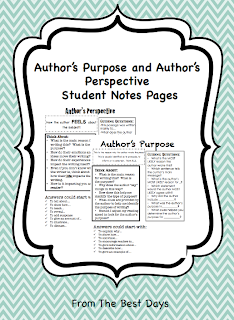
Author's Purpose and Perspective Student Notes!

I'm back to work tomorrow just as many of you are!  I hope you had a wonderful Thanksgiving vacation!